Tronadian Web Hosting logo Tronadian Tronadian Web Hosting logo Tronadian
News:
Automatic Daily Backups New Feature - SiteJet Builder
CAD
  • CAD
  • USD
  • 0
    Account
    ExtendReduce
    Home
    Domains
    Register a New Domain Transfer a Domain My Domains
    Store
    Browse All ----- Shared Hosting WordPress Hosting SSL Certificates SEO Tools Website Security Site & Server Monitoring Professional Email ----- Register a New Domain Transfer Domains to Us
    Announcements Knowledgebase Network Status Contact Us
    Articles
    View All Articles... Blueprint for Success: Choosing a Web Hosting Provider: Reliability Where It Matters: Shared Hosting, the Ultimate Launchpad:
    Client Login
    What makes a good website: 11 key elements
    1. Portal Home
    2. Articles
    3. What makes a good website: 11 key elements
    Website Planning

    What makes a good website: 11 key elements

    November 10, 2026 — Views: 7
    The 11 Pillars of High-Performing Web Design:
    A Guide to Modern Optimization.
    Building a successful digital presence requires balancing aesthetics, user psychology, and technical performance. The following 11 foundational elements serve as a comprehensive blueprint for designing websites that attract, engage, and convert visitors into loyal customers.

    man at computer

    1. Clear Purpose and Value Proposition
    Every successful website must begin with a singular, distinct objective. Whether your goal is to sell products, capture service inquiries, or drive newsletter sign-ups, your primary objective should guide every design decision. When visitors land on your homepage, they shouldn't have to decode your business. Instead, present a customer-focused headline that clearly explains what you offer, who it is for, and how it solves their specific problem.
    2. Intuitive, Effortless Navigation
    Good website navigation should be predictable and feel completely seamless. Keep your main menu focused on structural pages that support the customer journey—such as "Services," "Pricing," and "Contact"—while moving secondary items down to the footer. As a rule of thumb, visitors should be able to locate critical pieces of information within three clicks or less from anywhere on the site.

    3. Responsive, Mobile-First Design
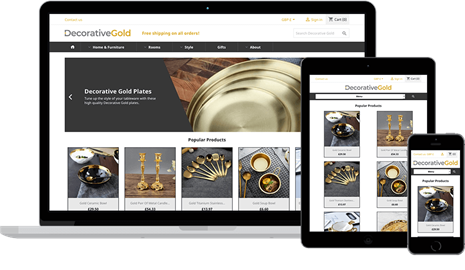
    With well over half of global web traffic originating from mobile devices, a responsive layout is an absolute necessity. Your site must dynamically adapt to any screen size, ensuring identical core functionality on smartphones, tablets, and desktops. This means utilizing flexible grid layouts, scaling images cleanly, and implementing touch-friendly navigation buttons with a minimum size of 44x44 pixels to avoid user frustration.
    4. Optimized Loading Speed
    Digital visitors are busy and rarely wait around for a sluggish page to load; a highly effective website should feel near-instantaneous. Google closely tracks site performance using its Core Web Vitals framework. You can drastically reduce your bounce rates and optimize your site infrastructure by compressing and optimizing images, cleaning up background code, and utilizing reliable web hosting platforms.
    5. Intentional Visual Hierarchy
    Great web design is a functional tool used to direct human attention, not just a decorative layer. A strong visual path leverages strategic whitespace, contrasting color schemes, and varied typography to guide the eye toward what matters most. Keep your core content sections cleanly separated, use whitespace to prevent sensory overload, and ensure that animations or interactive effects never compete with essential information.
    6. Customer-Centric Content
    Many businesses make the mistake of writing copy that focuses entirely on themselves. Highly effective websites flip the script by focusing squarely on the visitor. Rather than just publishing a dry list of product features, explain the practical real-world outcomes of those features. Translate your technical specifications into clear human benefits—such as how your product saves time, lowers risk, or alleviates a pain point.

    7. Prominent Calls to Action (CTAs)
    A visitor should never have to hunt around your page to figure out their next step. Your primary call to action—whether it is "Request a Free Consultation," "View Services," or "Start Your Free Trial"—should be highly visible and use action-oriented language. Make your CTA buttons stand out visually by using a distinct, high-contrast color that cuts through the rest of the page layout.
    8. Scannable Typography
    Online audiences tend to scan web pages quickly before committing to a deeper read. Make your text highly accessible by using crisp, legible fonts, keeping your body copy to a readable size (at least 16px), and breaking text down into short paragraphs. Using clear, descriptive headings and bulleted fragments allows skim-readers to capture your main points instantly.
    9. Visible Trust Signals and Credibility
    Before a casual browser turns into a paying customer, they need to know your business is reliable. Embed prominent trust signals directly into your layout. This includes displaying authentic customer testimonials, case studies, industry credentials, and security badges. Highlighting real human success stories alleviates customer hesitation and establishes immediate authority.
    10. Robust Technical Security (HTTPS)
    Security is the absolute baseline of modern digital trust. Every reputable website must be protected by an SSL certificate, which changes your URL prefix from HTTP to HTTPS. This encrypts the data flowing between your user's browser and your server, protecting sensitive inputs like contact forms, passwords, and payment information from malicious third parties.
    11. Search Engine Optimization (SEO)
    The most beautiful website in the world won't generate value if nobody can find it. Strong foundational SEO sits quietly beneath a great site structure. Ensure your site is highly crawlable by search engines by using descriptive keyword-optimized URL structures, clean heading hierarchies (H1, H2, H3), fast technical infrastructure, and descriptive alt text for every visual element on the page.


    Website Success Matrix

    Element Primary Focus Practical Implementation
    Value Proposition Message Clarity Customer-focused header explaining your exact offer
    Navigation User Flow Limit menu links; keep key info within 3 clicks
    Mobile Layout Responsiveness Fluid grids, readable text, 44x44px touch targets
    Site Speed Performance Image optimization and clean code to hit Core Web Vitals
    CTA Design Conversions High-contrast buttons with clear, action-oriented text


    ← Previous Article Shared Hosting, the Ultimate Launchpad: Next Article → Why Choose Canadian Servers for Data Hosting?

    Related Articles

    Shared Hosting, the Ultimate Launchpad:

    Shared Hosting, the Ultimate Launchpad:

    Starting a new online venture is an exciting milestone. Shared hosting is not just the most affordable option—it is the smartest launchpad available.

    ← Back to All Articles

    Categories

    • All Articles
    • FAQ 1
    • Hosting Providers 2
    • Website Planning 2

    Articles

    • Blueprint for Success:
    • Choosing a Web Hosting Provider:
    • Reliability Where It Matters:
    • Shared Hosting, the Ultimate Launchpad:
    • What makes a good website: 11 key elements
    • Why Choose Canadian Servers for Data Hosting?
    Tronadian Web Hosting logo Tronadian Web Hosting logo

    contact@tronadian.ca
    Product
    • Web Hosting
    • WordPress Hosting
    Domains
    • Domain Checker
    • Transfer Domain
    Services
    • SSL Certificates
    • Professional Email
    • Website Security
    • SEO Tools
    Legal
    • Privacy Policy
    • Terms Of Service
    • Acceptable Usage Policy
    • Contact Us
    Copyright © 2026 Tronadian Web Hosting. All Rights Reserved.
    FraudLabs Pro Prevents Fraud for Digital Businesses Payments
    Loading...
    Loading...
    Choose language
    العربية
    Azerbaijani
    Català
    中文
    Hrvatski
    Čeština
    Dansk
    Nederlands
    English
    Estonian
    Persian
    Français
    Deutsch
    עברית
    Magyar
    Italiano
    Macedonian
    Norwegian
    Português
    Português
    Română
    Русский
    Español
    Svenska
    Türkçe
    Українська

    Choose Currency

    $ CAD
    $ USD

    Generate Password

    Enter a number between 12 and 64 for the password length.

    We use cookies to improve your browsing and support experience. By continuing, you agree to our Privacy Policy.